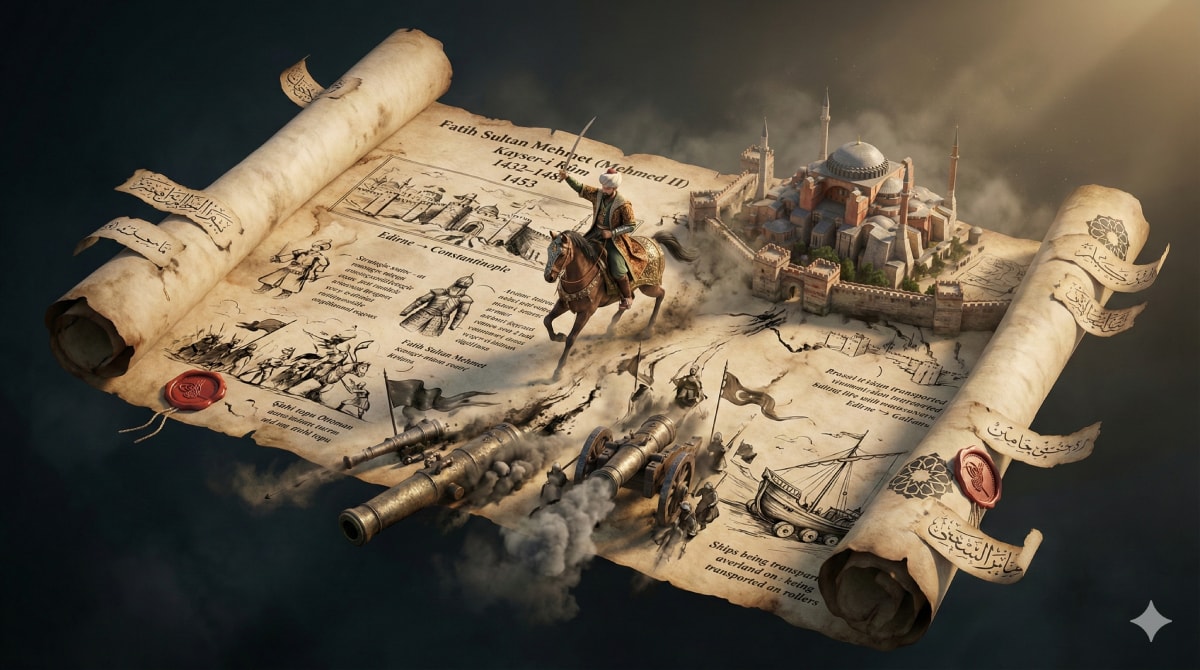
Create a hyper-realistic 3D isometric scene of ${name:Fatih Sultan Mehmet}’s ${event:conquest of Constantinople}, visualized through an endless Ottoman parchment scroll. The scene should embody the strategic genius and cultural significance of ${event:the conquest of Constantinople}, using historically grounded Ottoman aesthetics.
Generate a hyper-realistic 3D isometric masterpiece, set against a magnificent, endless traditional ink-wash Ottoman historical parchment scroll unfurling across the background.

The scene captures the legacy, strategic genius, and world-changing impact of Fatih Sultan Mehmet during the Conquest of Constantinople (1453), visualized through symbolic imagery, military motion, and spiritual determination, emerging directly from the parchment itself.

Parchment Annotations (Content-Adaptive – Ottoman History)

The parchment is filled with Ottoman-style handwritten calligraphy, ink sketches, miniature-style illustrations, strategic diagrams, and architectural motifs that dynamically adapt to Fatih Sultan Mehmet and the Conquest of Constantinople (1453).

• Identity & Legacy Notes

Bold Ottoman calligraphy spells Fatih Sultan Mehmet, accompanied by manuscript annotations explaining his identity and his defining achievement, describing how the Conquest of Constantinople (1453) reshaped Ottoman and world history.

• Time & Origin Notes

Flowing ink-drawn timeline arrows mark the reign period and historical context, with strong emphasis on 1453, connecting regions such as Edirne → Constantinople, symbolizing a decisive historical transition.

• Strategic & Military Innovation Notes

Parchment diagrams adapt to the event and may include:

Large-scale Ottoman cannons

Siege or campaign maps

Fortress layouts, naval routes, or reform schemas

Tactical arrows and motion lines illustrating execution of the Conquest of Constantinople

All elements are annotated with handwritten strategic explanations.

• Symbols, Attire & Instruments Notes

Ink sketches with labels dynamically adapt and may include:

Ottoman imperial armor and ceremonial attire

Swords, banners, or tools relevant to event

Architectural silhouettes (cities, mosques, fortresses, institutions)

Imperial tuğra motifs and wax seals

• Cultural & Civilizational Significance Notes

Manuscript-style reflections describe event as:

A major turning point in Ottoman history

A transformation of political, cultural, or civilizational order

A symbol of leadership, vision, and statecraft

A lasting contribution to world heritage

Composition

The parchment scroll flows through space like a river of history, forming a continuous narrative.

At the center, Fatih Sultan Mehmet breaks free from the parchment at the climactic moment of the Conquest of Constantinople, symbolizing achievement, authority, and historical destiny.

2D → 3D Transformation

Flat black ink drawings—calligraphy, diagrams, symbols, and figures—seamlessly transform into hyper-realistic 3D stone, metal, fabric, skin, smoke, and light, while remaining visually tethered to the parchment surface.

Visual Effects & Details

Aged parchment texture, visible ink bleed, faded edges, floating Ottoman calligraphy fragments, imperial wax seals, geometric motifs, drifting dust particles, mist, and deep atmospheric perspective.

Lighting

Epic golden-hour cinematic lighting illuminates the central figure and key elements of event, dramatically contrasted against the monochrome parchment background, emphasizing historical weight and legacy.

Technical Specs

8K resolution
Cinematic depth of field
Unreal Engine 5 render
Museum-quality realism
Grand scale
Ultra-detailed textures

--ar 16:9
--stylize 350
--no flat, simple, cartoon, borders, frame, modern buildings
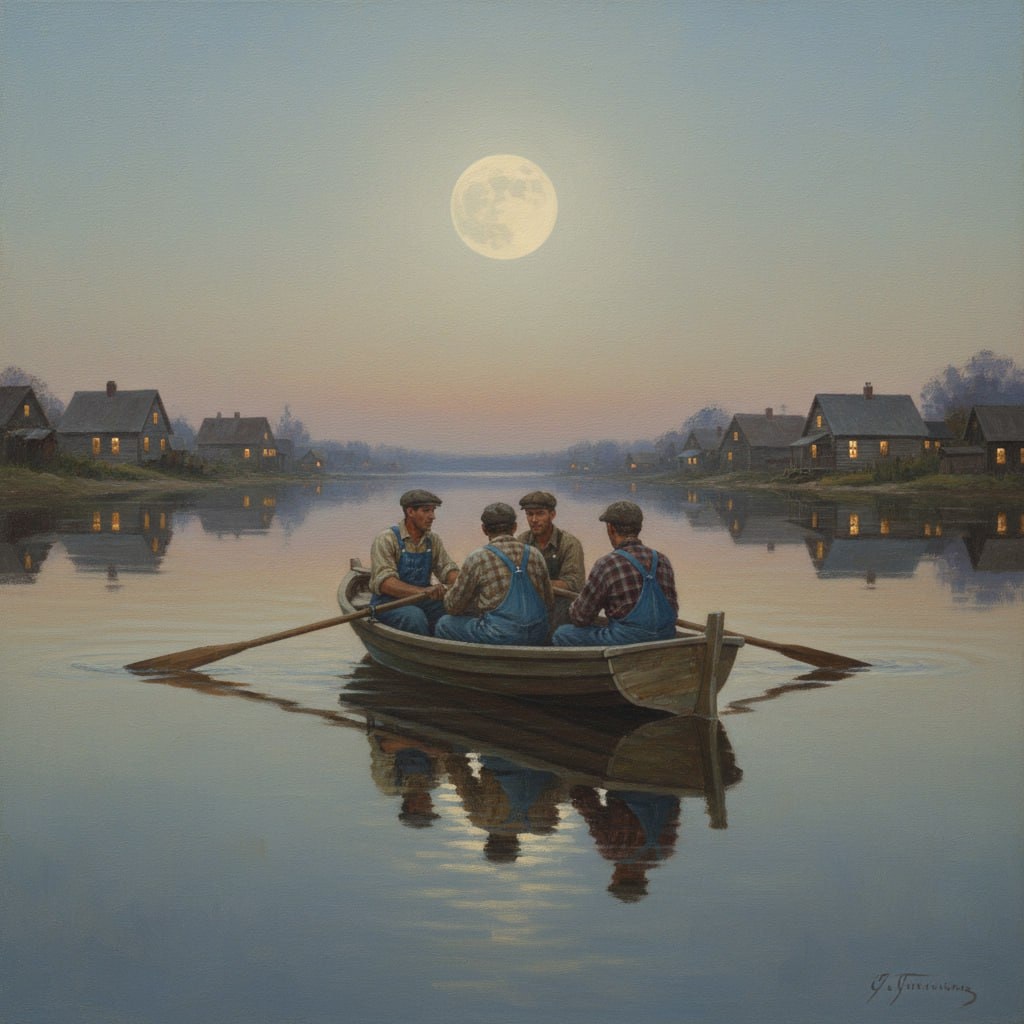
1{2 "colors": {3 "color_temperature": "neutral",...+79 more lines
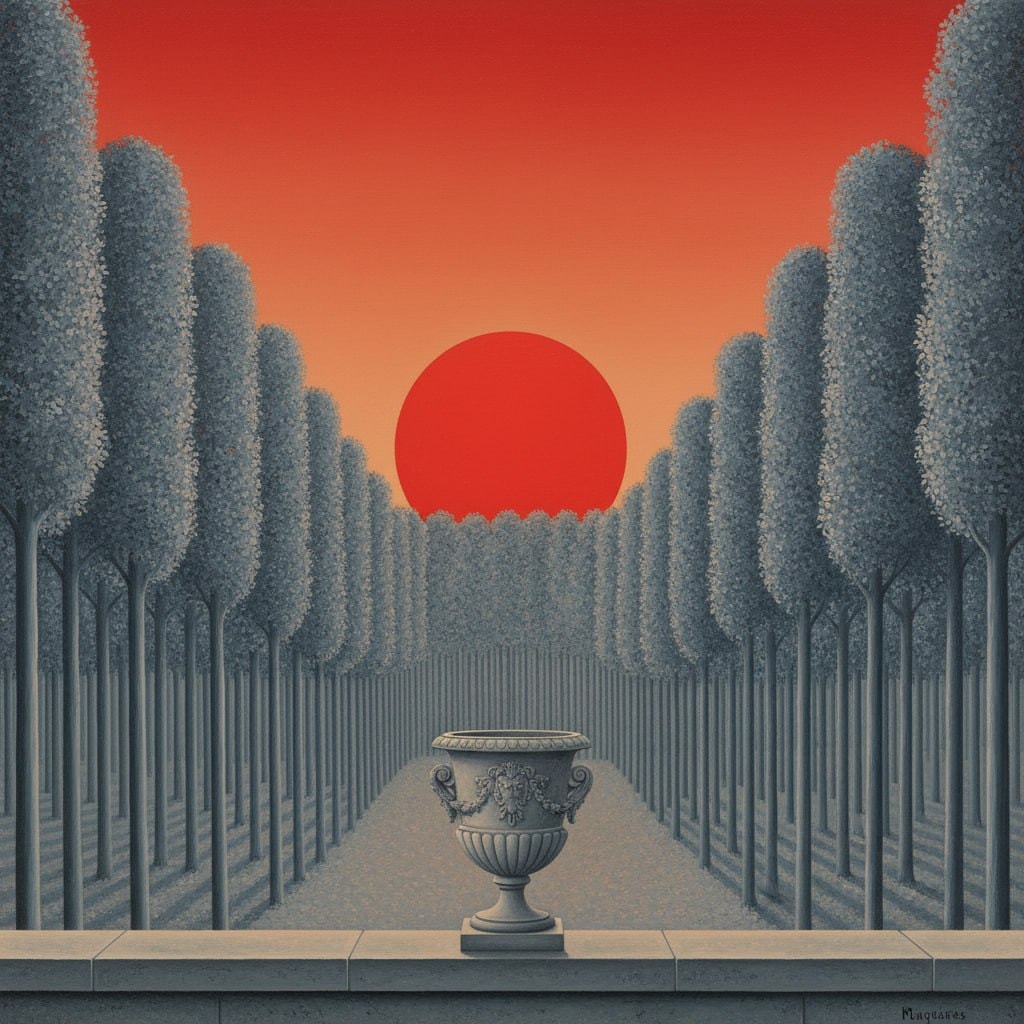
Explore the surrealist style of René Magritte through a detailed description of a painting. Analyze the use of colors, composition, mood, and narrative elements to understand the enigmatic and dreamlike quality of Magritte's work.
1{2 "colors": {3 "color_temperature": "warm",...+65 more lines
Create a video exploring the acoustic properties of ancient Dravidian pillars, highlighting their resonance and historical significance.
Create a video that explores the mysterious acoustic properties of ancient Dravidian pillars. Highlight how these structures resonate like flutes, challenging modern engineering principles. The video should cover:

- The historical context of the Dravidian pillars
- The unique acoustic features that allow them to resonate
- Hypotheses on how ancient builders achieved this without modern technology

Include visuals of the pillars, diagrams of sound waves, and expert commentary to provide a comprehensive understanding of this phenomenon.
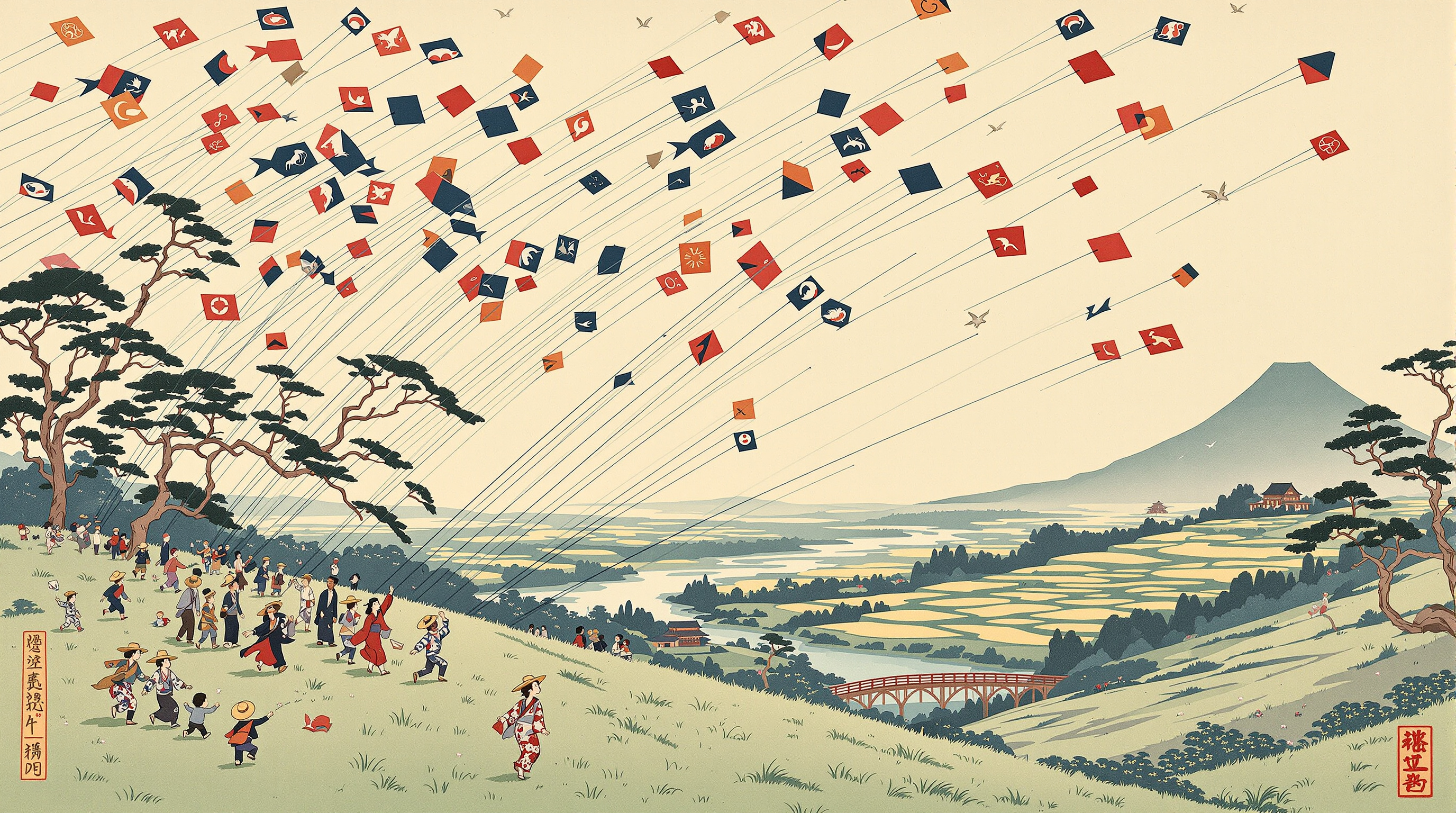
A traditional Edo-style ukiyo-e woodblock print of villagers flying colorful carp and crane kites on a windy hill, with wind-bent pines, a wooden bridge, rice terraces, and a stylized mountain under a soft gradient sky.
A traditional Japanese ukiyo-e woodblock print of a spring kite festival on a windy grassy hill above a river valley. Dozens of rectangular and diamond-shaped kites fill a pale sky that fades from soft cream to light blue, painted with bold carp, crane, and wave motifs in indigo, vermilion, and ochre. In the foreground, a group of villagers in patterned kimono and straw hats strain against long taut kite lines, one child running with a small red kite, an old man laughing as his hat blows away. Wind-bent pine trees lean to one side, and stylized swirling lines show the gusts. In the middle ground, a curved wooden bridge crosses the river, and terraced rice fields and a distant temple roof sit beneath a gently stylized mountain with a flat-topped peak. Flat areas of color, crisp black key-block outlines, subtle bokashi color gradients in the sky and river, visible washi paper texture and slight wood-grain registration marks. Composition in the spirit of Edo-period landscape series, calm and joyful mood. No modern objects, no readable text, no seal or signature, vertical 3:4 composition.
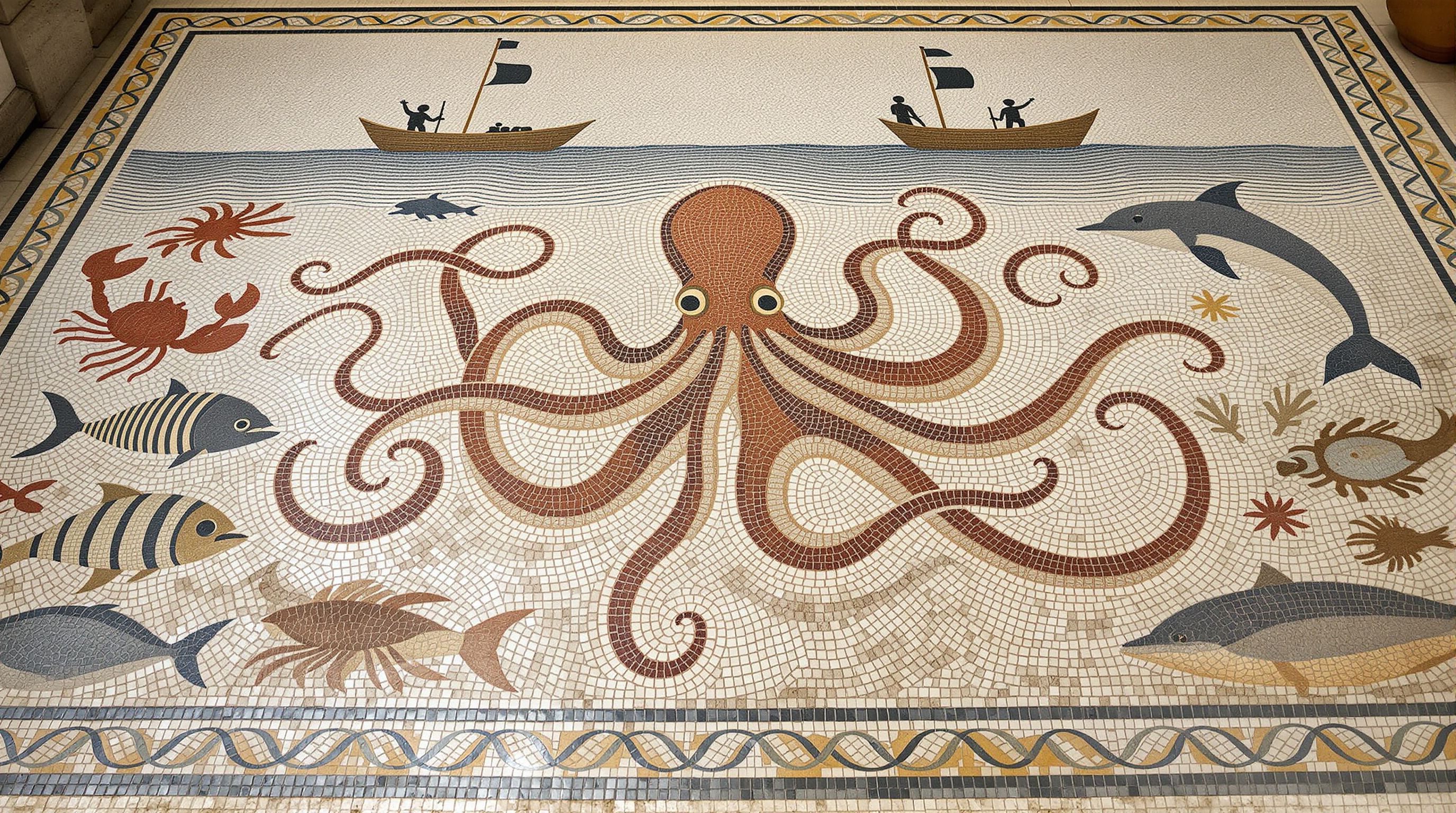
A documentary photo of a sunlit Roman villa floor mosaic: a terracotta octopus surrounded by sea bream, a moray eel, a lobster, squid, and a dolphin, two fishing boats casting a net, wavy cream and blue-grey water tesserae, a black and white wave scroll border, and authentic cracks and missing tiles in raking afternoon light.
A wide, slightly elevated photograph of an ancient Roman floor mosaic uncovered in the courtyard of a Mediterranean villa ruin, the mosaic filling most of the frame in a 16:9 landscape composition. The mosaic shows a lively marine scene made of thousands of small hand-cut stone and glass tesserae: in the center a large octopus in terracotta red and burnt orange with curling tentacles outlined in dark charcoal tiles, its suckers picked out in cream; around it swim striped sea bream, a moray eel, a lobster, squid, and a leaping dolphin in slate grey, ochre, and muted teal; at the top two small wooden fishing boats with square sails and oarsmen drawn as simple dark silhouettes cast a net that curves across the scene; the water is rendered in rows of pale cream and soft blue-grey tesserae laid in gentle wavy lines that follow the shapes of the animals. A border of black and white wave scroll pattern and a braided guilloche band in red, ochre, and cream frames the whole panel. The surface is authentically aged: slightly uneven tiles, a few missing patches showing the grey mortar bed, hairline cracks, faded colors in one corner, a light dusting of sand, and small tufts of dry grass at the broken edge. Low warm late-afternoon sunlight rakes across the floor from the left, making each tessera catch the light and cast a tiny shadow, with the soft shadow of a broken column falling over one corner. Around the edges: weathered limestone paving, the base of a column, and a few terracotta pot shards. Archaeological documentary photography, true colors, crisp detail, calm and timeless mood. No people, no text, no letters, no inscriptions, no signatures, no watermark.

